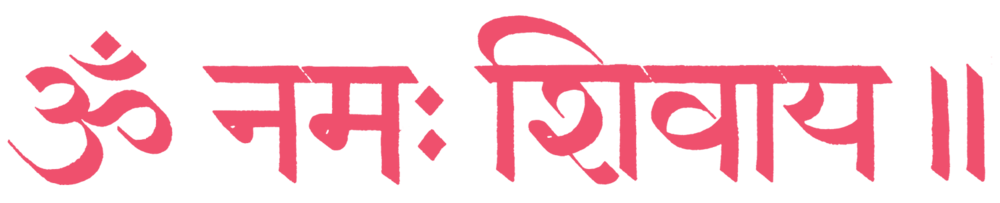
Om Namah Shivaya
WHO IS LORD SHIVA?


Shiva ( Sanskrit: शिव, the auspicious one) also known as Mahadeva (lit. the great god) is one of the principal deities of Hinduism. He is one of the supreme beings within Shaivism, one of the major traditions within contemporary Hinduism.
Shiva is known as “The Destroyer” within the Trimurti, the Hindu trinity that includes Brahma and Vishnu. In Shaivism tradition, Shiva is one of the supreme beings who creates, protects and transforms the universe. In the Shaktism tradition, the Goddess, or Devi, is described as one of the supreme, yet Shiva is revered along with Vishnu and Brahma. A goddess is stated to be the energy and creative power (Shakti) of each, with Parvati (Sati) the equal complementary partner of Shiva. He is one of the five equivalent deities in Panchayatana puja of the Smarta tradition of Hinduism.
According to the Shaivism sect, the highest form of Ishvar is formless, limitless, transcendent and unchanging absolute Brahman, and the primal Atman (soul, self) of the universe. There are many both benevolent and fearsome depictions of Shiva. In benevolent aspects, he is depicted as an omniscient Yogi who lives an ascetic life on Mount Kailash as well as a householder with wife Parvati and his two children, Ganesha and Kartikeya. In his fierce aspects, he is often depicted slaying demons. Shiva is also known as Adiyogi Shiva, regarded as the patron god of yoga, meditation and arts.
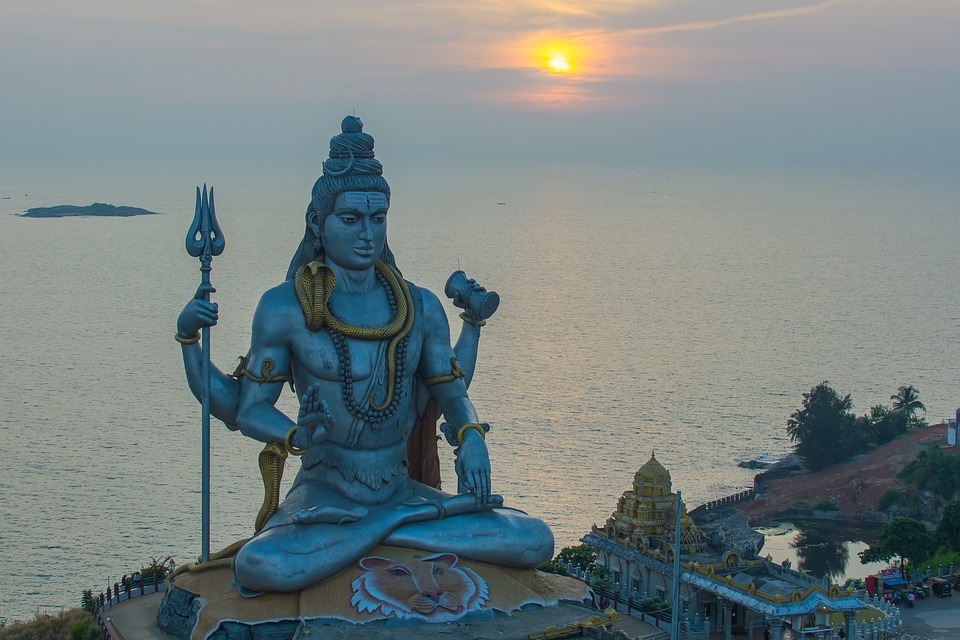
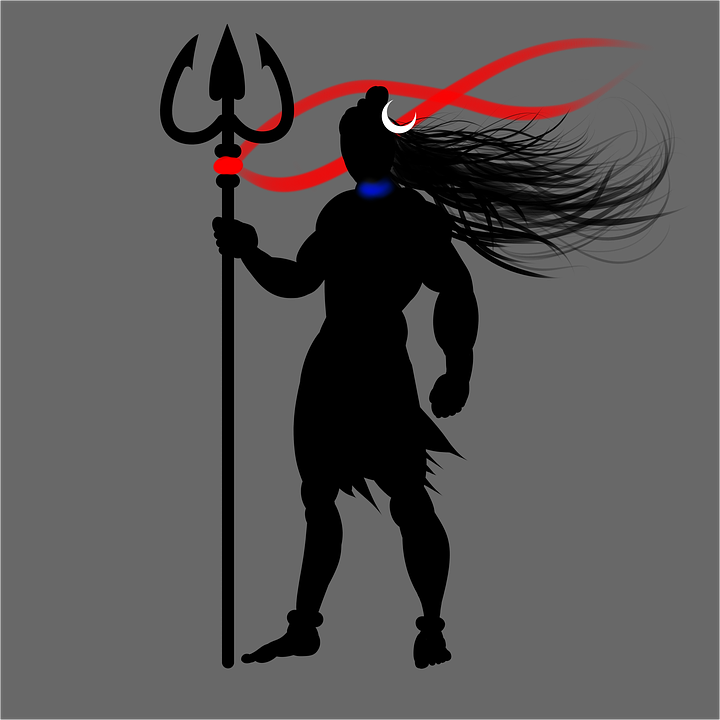
The iconographical attributes of Shiva are the serpent around his neck, the adorning crescent moon, the holy river Ganga flowing from his matted hair, the third eye on his forehead, the trishula or trident, as his weapon, and the damaru drum. He is usually worshipped in the aniconic form of Lingam. Shiva is a pan-Hindu deity, revered widely by Hindus, in India, Nepal and Sri Lanka.
WHAT IS OM NAMAH SHIVAYA?
This mantra is repeated verbally or mentally, drawing the mind in upon itself to Lord Shiva’s infinite, all-pervasive presence. Traditionally it is repeated 108 times a day while keeping count on a strand of rudraksha beads. This practice is called japa yoga. It is freely sung and chanted by everyone, but it is most powerful when given by one’s guru. Before this initiation which is called mantra diksha, the guru will usually require a period of study. This initiation is often part of a temple ritual, such as a puja, japa, homa (fire ceremony), dhyana or and while smearing vibhuti. The guru whispers the mantra into the disciple’s right ear, along with instructions on how and when to chant it.
This mantra is associated with qualities of prayer, divine-love, grace, truth, and blissfulness. When done correctly, it calms the mind and brings spiritual insight and knowledge. It also keeps the devotee close to Shiva and within His protective global fellowship.
Traditionally, it is accepted to be a powerful healing mantra beneficial for all physical and mental ailments. Soulful recitation of this mantra brings peace to the heart and joy to the Ātman or soul. Many Hindu teachers consider that the recitation of these syllables is sound therapy for the body and nectar for the Ātman. The nature of the mantra is the calling upon the higher self; it is the calling upon Shiva.
HISTORY
Om Namah Shivaya (Devanagari: ॐ नमः शिवाय; Om Namaḥ Śivāya) is one of the most popular Hindu Mantra and the most important mantra in Shaivism. Namah Shivaya means “O salutations to the auspicious one!”, or “adoration to Lord Shiva”. It is called Siva Panchakshara, or Shiva Panchakshara or simply Panchakshara meaning the “five-syllable” mantra (viz., excluding the Om) and is dedicated to Lord Shiva. It is a holy salutation to Lord Shiva. This Mantra appears as ‘Na’ ‘Ma’ ‘Śi’ ‘Vā’ and ‘Ya’ in the Shri Rudram hymn which is a part of the Krishna Yajurveda and also in the Rudrashtadhyayi which is a part of the Shukla Yajurveda.
This mantra is present in the Shri Rudram hymn which is part of the Krishna Yajurveda. Shri Rudram hymn is taken from two chapters in fourth book of Taittiriya Samhita (TS 4.5, 4.7) of Krishna Yajurveda. Each chapter consist of eleven anuvaka or hymns. Name of both chapters are Namakam (chapter five) and Chamakam (chapter seven) respectively.Om Namah Shivaya mantra appears without OM in eighth hymn of Namakam(TS 4.5.8.1) as Namah shivaya ca shivataraya (Sanskrit: नमः शिवाय च शिवतराय च; IAST: Namaḥ śivāya ca śivatarāya ca). It means “Salutations unto Śiva the auspicious one, unto Śivatara the one than whom none more auspicious can exist”.
This mantra also appears in the Rudrashtadhyayi which is a part of the Shukla Yajurveda. In the Rudrashtadhyayi, the mantra appears in the 5th chapter (also known as Namakam) verse 41 as Namah shivaya ca shivataraya (Sanskrit: नमः शिवाय च शिवतराय च).
Namah Shivaya means “O salutations to the auspicious one!”, or “adoration to Lord Shiva” preceded by the devotional syllable “Om”.
In Siddha Shaivism and Shaiva Siddhanta Shaivism traditions, Namah Shivaya is considered as Pancha Bodha Tatva of Lord Shiva and his universal oneness of five elements:
- Na sound represents earth
- Ma sound represents water
- Śi sound represents fire
- Vā sound represents Pranic air
- Ya sound represents sky or ether
Its total meaning is that “universal consciousness is one” .
In the Shaiva Siddhanta Shaivism tradition the five letters also represents :
- Na is the Lord’s concealing grace
- Ma is the world
- Śi stands for Shiva
- Vā is His revealing grace
- Ya is the Ātman or soul
The Tirumantiram (a scripture in Shaiva Siddhanta Shaivism) announces, “His feet are the letter Na. His navel is the letter Ma. His shoulders are the letter Śi. His mouth, the letter Vā. His radiant cranial center aloft is Ya. Thus is the five-lettered form of Shiva.”: Tirumantiram
If you apply the Katapayadi system to the five syllables of the mantra, ‘Na’ ‘Ma’ ‘Śi’ ‘Vā’ and ‘Ya’ you get the following numbers: 0,5,5,4,1. Using the principles of the Bhutasamkhya system this numerical code can stand for the following: 0 (void, abhāva), 5 (karmendriyas), 5 (jñānendriyas), 4 (puruṣa + antaḥkaranas) and 1 (Paramaśiva). The mantra then becomes a numerical mapping of the components or principles (tattvas) in the evolution of the empirical jiva, the paśu, in its journey to reach and merge with Paramaśiva. By meditating on the mantra, the paśu must try to transcend the limitations of its empirical self, and merge with Paramaśiva.
Om Namah Shivaya is a five-syllable mantra dedicated to Lord Shiva. The benefit of Om Namah Shivaya chanting is that it connects you with the true blissfulness. … Om Namah Shivaya mantra generates several sound waves per second. These waves enhance human intelligence to the optimum level.
-
Featured
My First Blog Post
Be yourself; Everyone else is already taken. — Oscar Wilde. This is the first post on my new blog. I’m just getting this new blog going, so stay tuned for more. Subscribe below to get notified when I post new updates.
-
Introduce Yourself (Example Post)
This is an example post, originally published as part of Blogging University. Enroll in one of our ten programs, and start your blog right. You’re going to publish a post today. Don’t worry about how your blog looks. Don’t worry if you haven’t given it a name yet, or you’re feeling overwhelmed. Just click the… Read more
Follow My Blog
Get new content delivered directly to your inbox.
 Om Namah Shivaya